Who Is Donna Sicuranza? The Woman Who Helped Shape TEAM
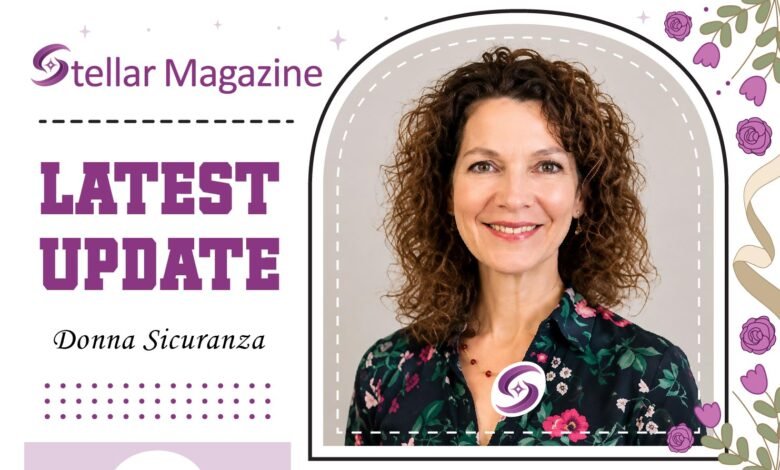
Donna Sicuranza is an American nonprofit executive, writer, editor, and animal-welfare advocate whose career has focused on making veterinary care easier for cat owners and caretakers to access. Today, she is listed professionally as Donna Sicuranza Marconi and serves as Executive Director of Tait’s Every Animal Matters (TEAM) in Connecticut. Her work with the organization dates back to planning its mobile feline clinic in the 1990s.
Unlike a public figure whose life is widely covered by entertainment media, Sicuranza is known mainly through her professional work. Her story connects communications, nonprofit management, feline population control, and long-term community service. This article looks at Donna Sicuranza’s early family background, education and communications work, partnership with veterinarian John Caltabiano, role at TEAM, mobile clinic program, family connection to animals, personal life, and work today.
Quick Bio
| Detail | Information |
| Full Name | Donna J. Sicuranza |
| Current Professional Name | Donna Sicuranza Marconi |
| Nationality | American |
| Profession | Nonprofit executive, writer, editor, and animal-welfare advocate |
| Current Role | Executive Director |
| Organization | Tait’s Every Animal Matters (TEAM) |
| Professional Base | Westbrook, Connecticut, United States |
| Known For | Leadership of TEAM and its mobile feline clinic |
| Main Focus | Affordable feline spay/neuter and vaccination care |
| TEAM Clinic Planning | Began in 1996 |
| Mobile Clinic Launch | March 1, 1997 |
| Reported Impact | More than 225,000 cats sterilized and vaccinated by TEAM |
| Longtime Partner | Dr. John A. Caltabiano |
| Sister | Dina M. Sicuranza |
| Age / Date of Birth | Not reliably documented publicly |
Early Life and Family Background
Donna J. Sicuranza grew up in a family with a clear interest in animals. Her parents were Robert J. “Red” Sicuranza and Marlene C. Patitucci Sicuranza, and she has a sister named Dina M. Sicuranza. Family records connect Donna and Dina with Westbrook, Connecticut, a community that later became closely tied to Donna’s professional life.
Animals were part of the family environment long before Donna became a nonprofit leader. Her father trained field dogs, enjoyed birdwatching, and shared his daughters’ interest in horses. During the 1970s and 1980s, he supported their equestrian activities and became involved with horse shows in Connecticut. This background gives useful context to Donna’s later career, though her public record does not provide many other details about her childhood.
Education and Communications Career
Sicuranza’s professional path did not begin in veterinary medicine. Her publicly indexed professional information links her to Trinity College-Hartford from 1989 to 1992. Other professional records also link her education to Fairfield University, but detailed degree information is not documented as clearly as her later nonprofit career.
Before becoming widely associated with TEAM, Sicuranza worked in journalism and public relations. She also developed experience as a writer and editor. Those skills fit naturally with the work she later performed for an animal-welfare organization, where public education, fundraising messages, community communication, and clear service information all matter. Her writing background remained visible years later, including her role as editor of a TEAM newsletter published in 2019.
How Donna Sicuranza Joined Animal Welfare
Sicuranza’s move into organized animal welfare became closely linked with veterinarian Dr. John A. Caltabiano. Caltabiano had already built experience taking veterinary care directly to clients. In 1980, he established a mobile veterinary practice that treated animals ranging from household pets to much larger animals.
As Sicuranza and Caltabiano became involved with TEAM, public calls pointed to a recurring problem: large numbers of unwanted cats and kittens. Rather than focusing only on finding homes after litters were born, the program shifted to reducing unplanned reproduction. Sicuranza brought communications and organizational experience to that work, while Caltabiano brought veterinary knowledge. Their different professional backgrounds came together in the same animal-welfare effort.
What Is Tait’s Every Animal Matters (TEAM)?
Tait’s Every Animal Matters, better known as TEAM, grew out of an earlier animal-adoption effort connected to Caltabiano. A bequest associated with Vernon A. Tait, a New Haven businessman and animal lover, helped support the organization that later carried the Tait name.
TEAM developed a clear focus on cats and practical veterinary care. Its best-known program is a mobile clinic that provides feline sterilization, vaccinations, and related services. The model lets the clinic travel instead of requiring every client to visit a single permanent facility. It has served domestic cats, feral cats, and cats cared for in community settings.
Donna Sicuranza and John Caltabiano
Donna Sicuranza and John Caltabiano shared both a professional mission and a personal relationship. Connecticut government records described Sicuranza as Caltabiano’s longtime partner. Together, they worked on ways to control cat populations while keeping veterinary services within reach of people who might struggle with the cost or location of traditional care.
Their Partnership and Shared Mission
Their work brought two areas together. Caltabiano understood veterinary medicine and feline population control, while Sicuranza had experience in communication and nonprofit leadership. By 1996, planning for TEAM’s mobile feline spay/neuter clinic was underway, with both involved in directing the project.
The goal was practical: take lower-cost care closer to communities and prevent unwanted litters before more cats entered already strained rescue and shelter systems. That approach became the foundation of TEAM’s long-running program.
Continuing the Work After His Death
Caltabiano died from cancer on November 6, 2009, at age 55. His death left Sicuranza carrying forward work they had developed together. A Connecticut Department of Agriculture record published after his death stated that she would continue his work with TEAM and FeralStat, a project Caltabiano had been developing as another approach to controlling feral-cat reproduction.
Sicuranza remained involved in animal-population discussions in later years. In 2019, she represented TEAM at Connecticut Animal Population Control Program Working Group meetings, linking the organization with wider discussions about veterinary costs, funding, animal control, and population-management programs.
Launching TEAM’s Mobile Cat Clinic
TEAM’s mobile feline clinic hit the road on March 1, 1997, after planning the previous year. The early operation was modest compared with the program that followed. TEAM’s historical account records 10 cats receiving surgery and vaccinations on the first day, while demand soon pushed the program to a much larger scale.
Why the Mobile Clinic Was Created
Cat overpopulation was not limited to people living near affordable veterinary hospitals. Rural areas, households with limited budgets, rescuers, and people caring for outdoor cats could struggle to arrange sterilization. A traveling clinic reduced the distance between those caretakers and the service.
The model was especially useful in places with barn cats and feral populations. By returning to different communities, TEAM could provide a regular route to preventive care instead of relying on isolated events.
Affordable Spay, Neuter and Vaccination Services
Affordability was built into the program from the start. When the clinic began, the service cost about $25 per cat. By 2001, a $39 package covered spay or neuter surgery, an examination, rabies and other vaccinations, nail trimming, and ear-mite treatment.
The price changed over the years, but the basic idea remained focused on combining sterilization with other routine care. This made a clinic visit more useful than surgery alone and helped owners and caretakers handle several basic health needs at once.
How TEAM Has Helped Connecticut Cats
TEAM’s growth can be measured through several milestones. The clinic moved from a small start to thousands of procedures within its early years. Its continued operation turned what began as a local solution into a long-running feline care program.
From 40,000 to More Than 225,000 Cats
By 2001, only about four years after the clinic started, TEAM had sterilized more than 40,000 cats. Contemporary reporting said the clinic averaged around 40 surgeries per visit. The numbers continued to rise over the following two decades.
On February 4, 2019, TEAM marked its 200,000th sterilization procedure in Torrington. The milestone patient was Calypso, a rescued calico cat. TEAM now reports that its veterinary staff has sterilized and vaccinated more than 225,000 cats since 1997. TEAM’s veterinary professionals perform the surgeries, not Sicuranza herself.
Helping Feral and Community Cats
Feral cats have remained an important part of TEAM’s work. Their care can be difficult because caretakers may need to trap and transport several animals while managing the costs of an entire colony.
TEAM created the TEAM Incentive Program (TIP) to help with sterilization costs for feral cats. By 2019, the program had assisted hundreds of cats. Sicuranza also wrote about a feral cat named Sobie, who visited her farm for food and shelter but was killed by a vehicle before she could have him neutered. The experience put a human face on the challenges outdoor cats and their caretakers face.
Donna Sicuranza’s Role as Executive Director
As Executive Director, Donna Sicuranza works on the organizational side of TEAM rather than serving as one of its veterinarians. The distinction matters because the clinic depends on trained medical staff to perform examinations, surgeries, and other veterinary procedures.
Her leadership role connects the medical program with the nonprofit structure that keeps it operating. Communication, planning, public outreach, fundraising, scheduling, staff coordination, and community relationships all support the clinic’s daily work. Her long history with TEAM has given the organization unusual continuity, with several staff members remaining connected to the program for decades.
Family Connection to Animals and TEAM
Donna’s animal-welfare career has links to her family beyond her childhood interest in animals. Members of the Sicuranza family have taken part in animal-related activities and TEAM itself.
Her Parents and Sister Dina Sicuranza
Donna’s father, Robert Sicuranza, served on TEAM’s board, creating a direct family connection with the nonprofit. He died in 2011. Her mother, Marlene, and sister, Dina, are named alongside Donna in family records.
Dina Sicuranza later joined TEAM’s veterinary staff and has been identified by the organization as a senior veterinary technician. Donna therefore works on the executive side of a nonprofit where her sister has contributed to hands-on veterinary care.
Her Early Connection to Horses
Before cats became central to Donna’s public career, horses were already part of her family life. Her father supported Donna and Dina’s interest in horses and spent years involved with Connecticut horse shows. He also served terms as treasurer of the Connecticut Hunter/Jumper Association.
These details provide one of the few documented glimpses into Donna’s younger years and show that her connection with animals predates her work with TEAM.
Donna Sicuranza’s Personal Life and Privacy
Sicuranza has kept most of her personal life out of the public eye. Her exact date of birth and age have not been established in reliable records, and dependable public information about children or personal wealth is similarly limited. Giving exact figures for her age or net worth would therefore create a biography that looks more complete but is less accurate.
Her relationship with John Caltabiano is the best-documented part of her adult personal life. Government records identify him as her longtime partner. Online searches can cause confusion because another woman named Donna Marie Sicuranza had a different family and banking career. Details from that person should not be mixed with the TEAM executive’s biography.
Donna Sicuranza Marconi and Her Life Today
TEAM currently identifies its Executive Director as Donna Sicuranza Marconi. Older reports and records generally refer to her as Donna Sicuranza or Donna J. Sicuranza. The shared organization, career history, and professional context connect these names to the same animal-welfare executive.
Her present public profile remains centered on TEAM rather than personal publicity. Decades after the mobile clinic began, she continues to be associated with the organization that she helped develop during its early planning period. Her career now spans the clinic’s journey from a new idea in the 1990s to a program with hundreds of thousands of recorded feline procedures.
Donna Sicuranza’s Impact on Animal Welfare
Donna Sicuranza’s contribution is best understood through the system she helped keep running. Her role has supported a model that brings lower-cost veterinary services closer to cat owners, rescuers, and community-cat caretakers. The work combines prevention with access, aiming to reduce unwanted litters while providing basic health care.
Her communications background is another meaningful part of that record. Animal-welfare programs need more than medical staff; people must understand why the service exists, where to find it, and how to use it. Sicuranza’s career brought writing, public relations, nonprofit management, and animal advocacy into one long-term role. TEAM’s survival over several decades clearly reflects that commitment.
Conclusion
Donna Sicuranza has built her public career around animal welfare rather than personal fame. From her early connection with animals and work in journalism and public relations to her partnership with John Caltabiano, she became closely involved in creating a practical response to feline overpopulation. TEAM’s mobile clinic turned that idea into a service that has continued for decades.
Today, Donna Sicuranza Marconi remains identified as TEAM’s Executive Director. Her story is tied to affordable veterinary care, feral-cat support, nonprofit leadership, and the steady work needed to keep a specialized program serving communities year after year. Rather than being defined by private-life details, Sicuranza’s public record is shaped by the organization she helped build and the long-running feline welfare work connected with her name.
Read About: Laura Deibel